
Is Tap to Pay Safer Than Swiping?
Yes. Tap to pay is generally safer than swiping your card because contactless payments use modern chip technology and unique security information for each transaction instead of relying on the magnetic stripe on the back of your card.
Your card also stays in your hand while you pay, helping reduce the risk of loss or unauthorized handling. Plus, each Mastercard debit or credit card contactless transaction is encrypted with a unique, dynamic cryptogram.
With SCU Mastercard debit cards and credit cards, tap to pay gives you a fast, convenient way to make purchases anywhere you see the contactless symbol. SCU is upgrading its entire debit and credit card lineup to Mastercard in late summer/early fall 2026, including secure tap-to-pay technology.
So, how does tap-to-pay security actually work, and how does it compare with inserting or swiping your card?
What Is Tap to Pay and How Does It Work?
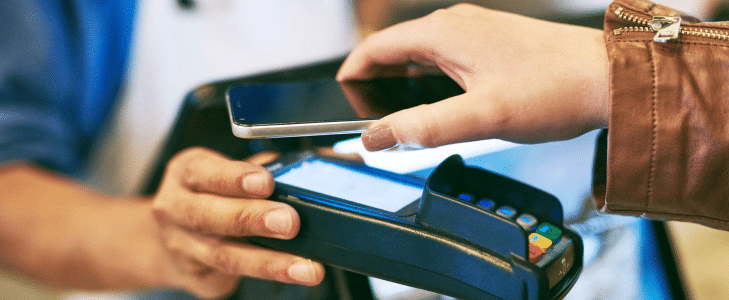
Tap to pay, also called contactless payment, lets you make a purchase by holding a contactless-enabled debit card, credit card, smartphone, or wearable device close to a compatible payment terminal.
This technology is powered by RFID (Radio Frequency Identification) and NFC (Near Field Communication). While RFID allows contactless cards to transmit data wirelessly over short distances, NFC—a specialized subset of RFID—enables secure, two-way communication between your card or mobile device and the payment reader.
Instead of swiping the magnetic stripe or inserting the card into the reader, contactless technology allows the card or device and payment terminal to securely communicate over a very short distance.
For Mastercard contactless payments, each transaction uses encryption and a unique dynamic cryptogram to help protect your payment information.
Tap vs. Chip vs. Swipe: Which Is Safer?
Tap, chip and swipe can all be used to complete an in-person card purchase, but they do not provide the same type of security. When you have the option, tapping or inserting your chip is generally preferable to swiping the magnetic stripe.
- Tap: Hold your contactless card or mobile device near the terminal. Your card never leaves your hand, and the transaction is protected by modern chip technology using dynamic, one-time security codes.
- Insert Chip: Insert the card directly into the terminal slot. It uses modern EMV chip technology to generate an encrypted transaction code, preventing card cloning.
- Swipe: Run the magnetic stripe through the terminal’s reader. This is the least secure method because it relies on static, unencrypted data stored on the stripe, lacking transaction-specific protections.
Why is swiping less secure?
The magnetic stripe is older payment technology that stores card information used to process the transaction.
Tap-to-pay transactions use more advanced chip-based security. Mastercard contactless transactions generate unique security information for each purchase, making transaction data substantially harder to reuse.
Why Is Tap to Pay Safer Than Swiping?
Several features contribute to contactless payment security.
Each transaction has unique security protection
One of the most important differences between tapping and swiping is how your transaction information is protected.
Mastercard contactless payments use a unique dynamic cryptogram for each transaction. That means the security information associated with one purchase is not simply reused for the next purchase.
Your card stays in your hand
With tap to pay, you normally do not need to hand your debit or credit card to anyone or insert it into a payment terminal.
Keeping the card in your possession reduces opportunities for it to be lost, left behind, or handled by someone else. Keeping the card or device in your hand is one of the security benefits of contactless payments.
You avoid relying on the magnetic stripe
Tapping uses modern contactless chip technology rather than the magnetic stripe used during a swipe transaction.
While no payment method can eliminate every possibility of fraud, using newer chip-based payment methods provides protections that traditional magnetic-stripe transactions do not.
Is Tap to Pay With Your Phone Secure?
Yes. Paying with a mobile wallet can provide additional layers of security.
Mobile wallets such as Apple Pay and Google Pay can use tokenization, which substitutes your actual card number with a different digital number or token. This means the merchant does not receive or store your actual card number during a tokenized mobile-wallet transaction.
Your smartphone may also require a fingerprint, facial recognition, passcode or another form of device authentication before allowing a payment.
You can add your SCU Mastercard debit card and credit card to Apple Pay and Google Pay in SCU Digital Banking, allowing you to make contactless purchases from a compatible mobile device.
Can Someone Steal Your Card Information Just by Standing Near You?
This is a common concern about how secure tap to pay is, but contactless payments are designed to operate only over a very short distance.
The payment terminal must be ready to accept the transaction, and the card or device generally needs to be within an inch or two of the reader. Mastercard also uses encryption and unique transaction security data to protect contactless purchases.
So simply walking past someone with a contactless card does not work like automatically charging their account.
Can You Be Charged Twice if You Tap Twice?
No. Contactless payment systems include safeguards designed to prevent an accidental second tap from creating a duplicate charge.
With Mastercard, safeguards are in place so you are billed only once if you accidentally tap your card more than one time.
Are Mobile Wallets Safer Than Using a Physical Card?
Both can provide strong security, but a mobile wallet can offer additional protections.
When a compatible card is added to a mobile wallet, tokenization replaces the actual card number with a digital token. The token is then used during the transaction rather than exposing the card number itself. Mobile devices can also require biometric or passcode authentication before allowing a purchase. That combination can make a mobile wallet a particularly secure option for contactless payments.
How to Use Your Debit or Credit Card More Securely
Technology can help protect your payments, but your own habits still matter. These debit and credit card security tips can help reduce your risk:
- Tap or insert your chip instead of swiping when those options are available.
- Consider using a mobile wallet for the added security of tokenization and device authentication.
- Never share your PIN, security code, or Digital Banking credentials.
- Review your account activity regularly and report unfamiliar transactions promptly.
- Be cautious of unexpected calls, texts or emails asking for card or account information.
- Report a lost or stolen debit or credit card as soon as possible.
Remember: Scott Credit Union will never call, text, or email you asking for your debit card number, credit card number, PIN, security code, or Digital Banking login credentials.
Tap to Pay With Your SCU Mastercard Debit or Credit Card
Scott Credit Union is upgrading its entire card lineup to Mastercard, bringing contactless tap-to-pay technology to both SCU debit and credit cards.
SCU Mastercard debit cards are rolling out from late August through September 2026, with SCU Mastercard credit cards following in October 2026. Once your new card arrives and is activated, you can use tap to pay wherever contactless Mastercard payments are accepted.
Whether you prefer to pay with debit, credit or a mobile wallet, the same principle applies: when tap to pay is available, it offers a secure and convenient alternative to swiping your card.
Ready to make everyday payments simple and secure? Explore SCU Checking Accounts with Mastercard debit cards and SCU credit cards.


